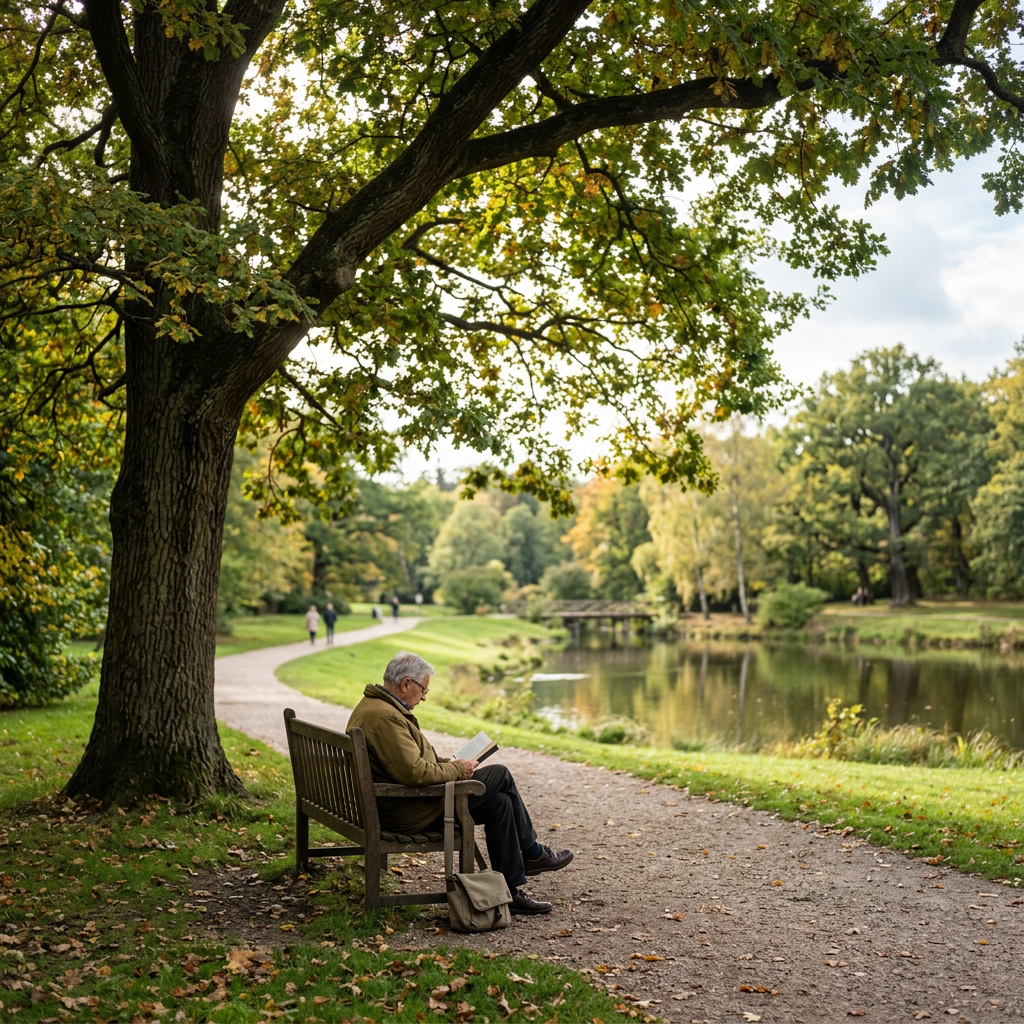
On the quiet intelligence of stepping back
Over the last few weeks, many readers wrote to me asking a simple question:
“Where did the letters go?”
Some messages carried warmth.
Some carried curiosity.
A few carried genuine concern.
And truthfully, I didn’t have a prepared answer.
The pause was not planned as a strategy. It did not begin with exhaustion or dissatisfaction. It began quietly — almost invisibly — as an inner need to step back from constant expression and sit more deeply with life itself.
For a long time, I too carried the modern discomfort around pauses.
We have been conditioned to believe that continuity means relevance. That movement means growth. That consistency of output is proof of commitment. Somewhere along the way, pauses started looking dangerous — as if stepping back meant losing momentum, identity, or value.
But life, I am beginning to realize, does not grow only through movement.
Nature pauses constantly.
Trees shed before they bloom again.
Rivers slow before changing direction.
Even seasons do not apologize for their transitions.
Only human beings seem uncomfortable with stillness.
During this pause, I noticed something important within myself:
when life moves continuously without reflection, it slowly becomes mechanical. We begin responding instead of observing. Producing instead of absorbing. Reacting instead of understanding.
Without pause, even self-growth can become performance.
And perhaps that is what I needed most — not more conclusions, but more space between them.
I spent more time quietly observing life. Conversations. Relationships. My own reactions. The hidden negotiations between authenticity and approval. The subtle fatigue of carrying identities that no longer fit. The economics of attention and emotional energy. The growing realization that grounded living requires deliberate inner alignment, not constant acceleration.
But beyond observations, the pause also changed me in quieter ways.
It brought more peace than I expected.
More honesty with myself.
And strangely, more courage to sit with uncomfortable questions without immediately searching for reassuring answers.
I began noticing how many of my thoughts, opinions, decisions, and even emotional reactions were quietly influenced by ego — by the need to appear right, useful, evolving, respected, or emotionally in control.
That realization was uncomfortable.
But it was also liberating.
Because once we begin seeing the subtle ways ego enters our inner life, we stop fighting only the outer noise. We begin understanding the inner noise, too.
What surprised me most was this:
clarity rarely arrives in noise.
It arrives slowly, after enough silence has settled.
A pause does something profound to the inner world. It interrupts momentum long enough for truth to catch up. Things we had postponed become visible. Emotions we had intellectualized begin asking to be felt. Borrowed priorities lose their urgency. We begin distinguishing what truly matters from what merely demanded our attention.
Pause is not withdrawal from life.
It is re-entry into life with greater coherence.
And this distinction matters deeply.
Because many people today are not tired only because life is difficult. They are tired because they have not paused long enough to hear themselves beneath the noise of expectation, productivity, comparison, and constant mental occupation.
The modern mind fears pause because pause removes distraction. And when distraction fades, unanswered questions surface:
Am I living truthfully?
What am I rushing toward?
Which parts of my life are sustained by habit rather than meaning?
What exactly is asking for my energy?
These are uncomfortable questions.
But they are also necessary ones.
I have come to believe that authentic living does not emerge from endlessly optimizing ourselves. It emerges from periodically returning to ourselves.
That is what this pause became for me:
not an interruption,
but a recalibration.
Not slowing down,
but listening more carefully.
And perhaps this is where I will attempt the next phase of these letters to imbibe — not merely reflections, but a deeper exploration of grounded authentic living, contemplative psychology, inner alignment, emotional clarity, and the subtle negotiations of modern human life.
Not as conclusions from a pedestal,
but as observations from within the human experience itself — sometimes clear, sometimes unfinished, but always sincere.
Before I close, I want to express heartfelt gratitude to those readers who waited patiently during this silence, who wrote messages, checked in, and expressed concern.
Over time, something beautiful has quietly formed through these letters — a relationship without faces, yet not without presence.
And perhaps that is the quiet gift of honest writing:
we begin as strangers,
but somewhere along the way,
we start recognizing each other inwardly.
Before I leave you today, I want to leave you with one question that stayed with me throughout this pause:
What in your life is asking not for another solution — but for a pause?
Perhaps the wisest movements in life are not always forward.
Sometimes they are inward.
Letters for the Inner Journey by Pushkar


Whisper back, if the letter spoke to you.