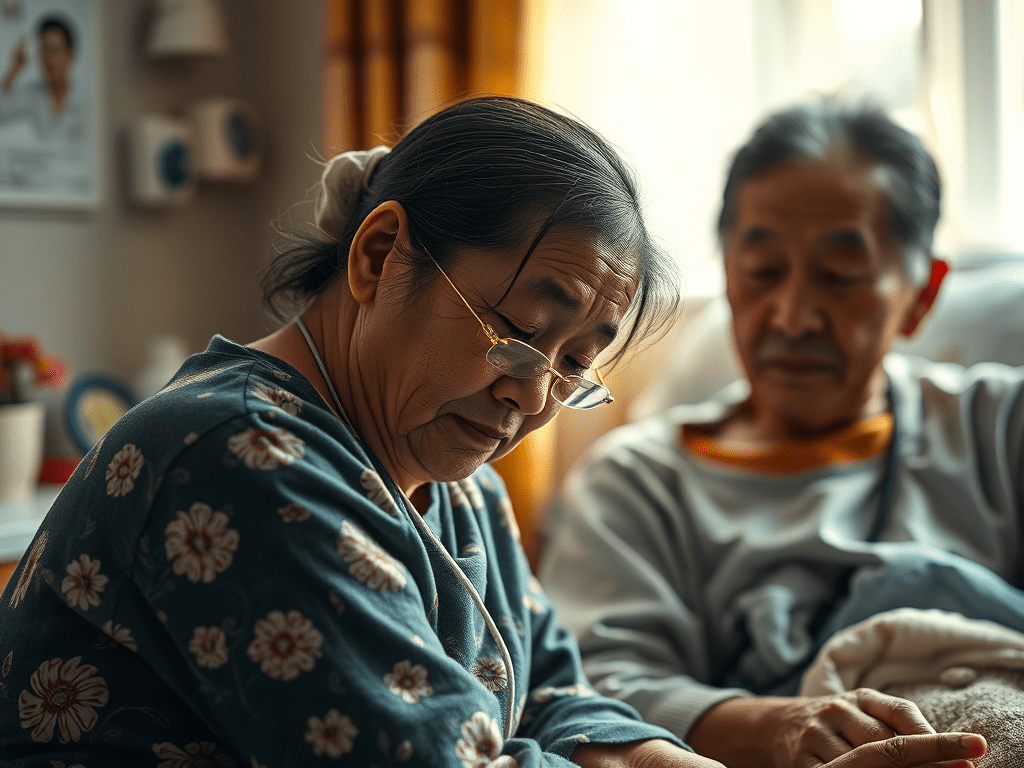
The silent, exhausting fight of caregivers
When illness enters a home, it seldom knocks politely. It arrives uninvited—sometimes gradually, sometimes suddenly—and nothing remains quite the same. The patient’s pain is visible, but quietly, almost invisibly, another suffering begins: that of the caregiver.
The caregiver’s life changes overnight. Roles that once felt optional now become non-negotiable. There are medicines to be given, appointments to be remembered, moods to be navigated, and routines to be rebuilt around the fragile rhythm of the illness. Social and financial equations shift—the outings reduce, expenses rise, and lighter, happier moments begin to evaporate under the weight of constant vigilance. In holding the family together, caregivers often overlook their own health, their need for rest, or even the simple joy of laughter.
I know this reality not from books, but from life itself. Twice, I found myself standing beside my spouse as she underwent brain surgeries. The surgeries were hers, but the tremors ran through me as well. Suddenly, my role was no longer only that of a husband—it expanded to nurse, scheduler, financier, and anchor for the wider family. I learned, painfully, how illness changes not just one body but the entire ecosystem around it.
It is in this space—the sleepless nights, the invisible sacrifices, the weight of responsibilities—that anguish takes root. This anguish is not weakness; it is the natural cry of a heart carrying more than it was ever prepared to. But alongside anguish comes another truth: the realization that caregiving is not just about managing a disease, but about managing life itself. Families that acknowledge this early find ways to share responsibilities, speak honestly about fears, and make space—even if briefly—for moments of joy.
Faith, too, becomes a quiet companion on this path. I often think of it like travelling through remote countryside: when the phone network vanishes, we grow anxious, trying every trick to reconnect. Yet eventually we learn to trust that the signal will return once we move beyond that dark patch. Caregiving is much the same. The connection to hope, to light, to normalcy may feel lost for a while—but faith reminds us that this disconnection is not forever.
So how can caregivers and families gear up for this journey?
- Acknowledge the shift: life will not resume exactly as before, and pretending otherwise deepens the pain.
- Distribute the weight: let responsibilities be shared, however unevenly, so no one collapses alone under the strain.
- Preserve the person behind the patient: illness must not erase laughter, hobbies, or identity. Small rituals of normalcy are as healing as medicine.
- Protect the caregiver: their rest, nutrition, and emotional support are not luxuries; they are survival tools.
- Keep faith in motion: uncertainty is not the end of the road—it is the space where possibility still lives.
As I discovered in my own journey, “Caring for someone is not losing yourself; it is finding a stronger self you never knew existed.”
Between cure and care lies the hidden work of healing. It is not about promising a perfect life, but about discovering the courage to walk together through an imperfect one. And perhaps in that very act—of holding on, of adjusting, of loving despite the unknown—families find not just endurance, but a deeper kind of grace.
My Gentle Prayer for All Caregivers
May your hands, though tired, never forget their tenderness.
May your heart, though heavy, remember its own light.
May your days, though altered, still carry moments of laughter.
And may you, the unseen pillar, know that your care is itself a form of healing.
Letters for the Inner Journey by Pushkar
If something lingered in your heart while reading this letter, I’d love to hear from you. Leave a comment below..


Whisper back, if the letter spoke to you.