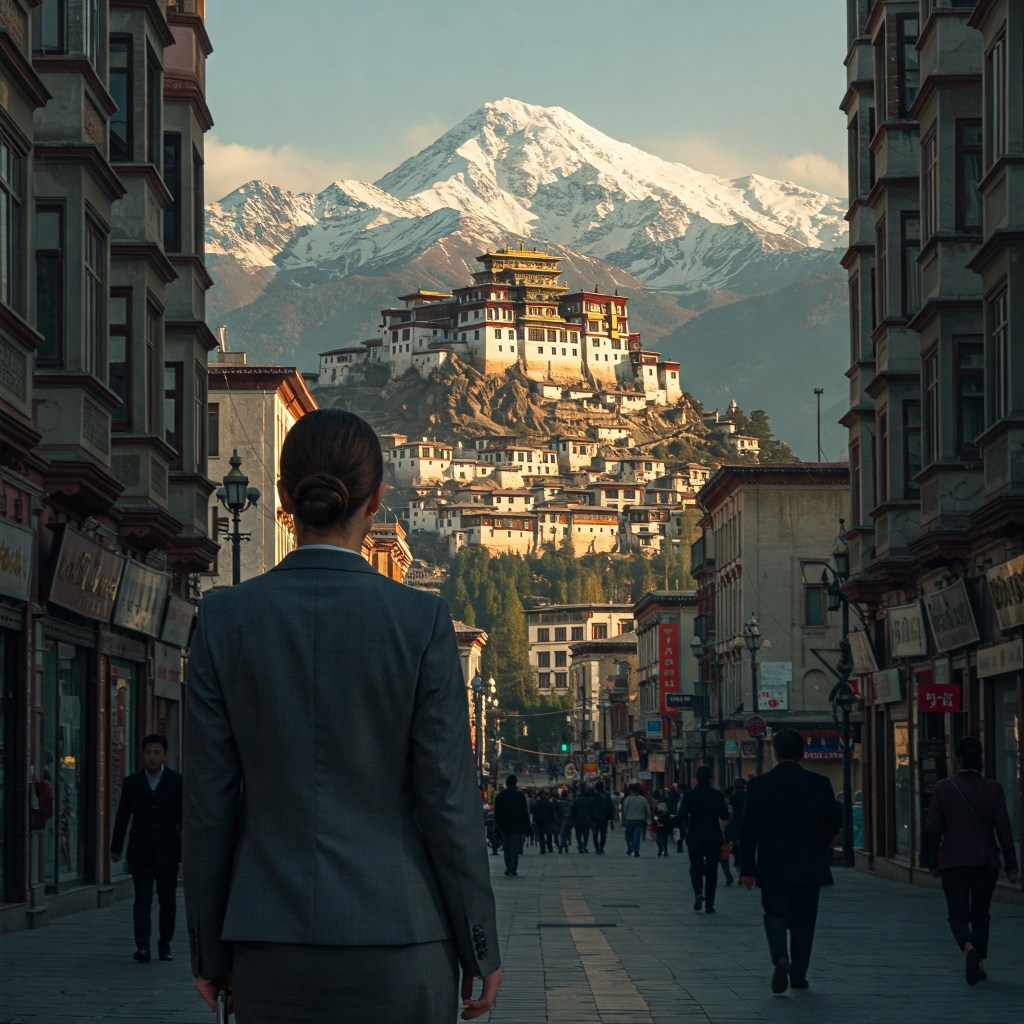
Reclaiming Stillness in the Midst of a Loud Life
Some years ago, on a late winter afternoon, I visited a friend who had moved to a village on the edge of a forest. I remember sitting on his veranda, a cup of strong tea in hand, watching nothing in particular. Just the trees breathing. The sky dissolving into indigo. No words, no thoughts vying for space. For those fifteen minutes, I wasn’t trying to fix anything—myself, others, or the world. I was just… there. And oddly, fully at peace.
I wish I could say I’ve held onto that feeling ever since. But the truth is, most of us, myself included, end up confusing peace with quiet surroundings, empty schedules, exotic retreats, or even spiritual performances. We romanticize monks and mountaintops while scrolling Instagram between deadlines. We seek peace the way one chases a mirage—intensely, but from a place of restlessness.
In this modern theatre of hyperproductivity and chronic comparison, peace has become both elusive and commercialized. It is sold to us in scented candles, mindfulness apps, luxurious silences behind paywalls. We have traded its simplicity for strategy.
But what if peace is not a distant state to be achieved, but a forgotten home within us? Not a trophy after a long fight, but the quiet room that exists before the battle even begins.
Most of the noise we experience isn’t around us—it’s within. We relive old conversations, pre-script future conflicts, edit who we are based on how we’re perceived. Our nervous systems, wired for survival, rarely get to switch off. So we confuse peace with escape—disappearing into holidays, hobbies, or health routines that promise to “center us,” while we remain lost at the core.
We often ask: “How can I get more peace in my life?” But the deeper question might be: “What am I doing that disrupts the peace already available to me?”
The search for peace doesn’t demand a monastery. It asks for honesty. For the willingness to slow down when the world urges acceleration. For soft boundaries in noisy relationships. For moments of presence before performance. It’s the discipline of turning down the volume of our inner judgment, not our outer environment.
Peace begins when we stop identifying with every passing thought, every impulse to win, please, or perfect. It grows when we stop narrating life as a series of problems to solve and start accepting it as a series of moments to meet.
And no, this isn’t easy. But it is possible.
Today, I try to find peace in ordinary rituals—watering plants, chewing mindfully, folding clothes with presence. Some days I fail. Some days I remember. But every time I remember, I am reminded that peace was never far. It just needed an invitation, not a condition.
So here’s an invitation—to you, and to me: Let us not wait for silence to feel peaceful. Let us become the silence, even in the middle of noise.
Letters for the Inner Journey by Pushkar

Whisper back, if the letter spoke to you.