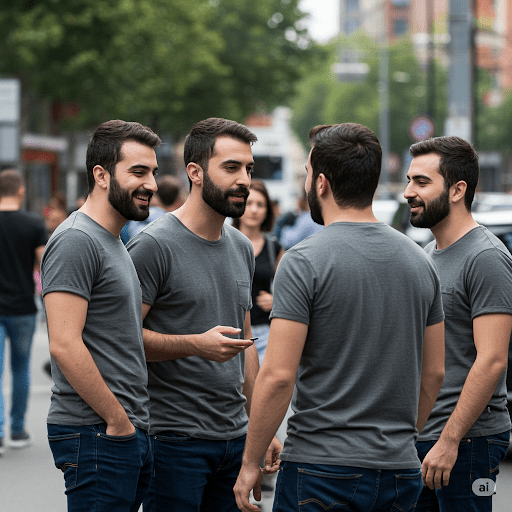
Why we try to remake others similar to our image and what it quietly costs us.
One evening, while pruning the trees in my garden, I caught myself mentally trimming something else—a person. Not with shears, but with silent expectations. I wished they would speak a little softer. Think a little more like me. Dress with a touch of more subtlety. Understand my silences. I was carving them, bit by bit, into someone more familiar—into, well… a version of myself.
And then I paused. Why was I doing this?
This silent moulding of others is not always loud or obvious. It often comes dressed in noble clothes: guidance, advice, feedback, concern. We call it wanting the best for someone. But sometimes, what we’re really chasing is the comfort of sameness.
The more people think like us, the less we have to explain. The more they act like us, the more affirmed we feel in our own ways. There is less friction, fewer surprises, and a strange kind of peace—or so it seems.
But in trying to recreate ourselves in others, we unwittingly commit a theft: we steal their right to be different.
Think of how often we fall into this trap:
- Expecting our children to echo our values exactly as we hold them.
- Wanting a partner to adopt our routines and emotional responses.
- Preferring colleagues who mirror our style of work and decision-making.
- Feeling disappointed when friends don’t react the way we would in their place.
We claim to celebrate diversity, yet secretly long for emotional replicas.
But here’s the paradox: peace is not born out of uniformity. It’s born out of maturity.
The ability to sit across difference without flinching, to love without rewriting, to listen without editing—is a deeper kind of power.
I believe this “clone syndrome” stems from a primal place. When the world feels chaotic, sameness gives us the illusion of control. When we doubt ourselves, similarity feels like validation. When we’re tired, sameness feels easy.
But in the long run, it makes us poor gardeners of human bonds.
Because people are not projects. They are poems—meant to be read, and not to be revised.
Today, if you find yourself wishing someone would just be more like you, I invite you to breathe and ask—what is this really about?
Is it about them? Or is it about a need within you that seeks soothing through familiarity?
Let others be the mystery they were meant to be. Learn to love them without needing to understand or edit every line. And most of all, let yourself evolve by embracing what’s unfamiliar.
Because often, the parts of others that disturb us the most are the parts that stretch our soul the deepest.

Whisper back, if the letter spoke to you.