A Poem for the 100th Letter
Last night,
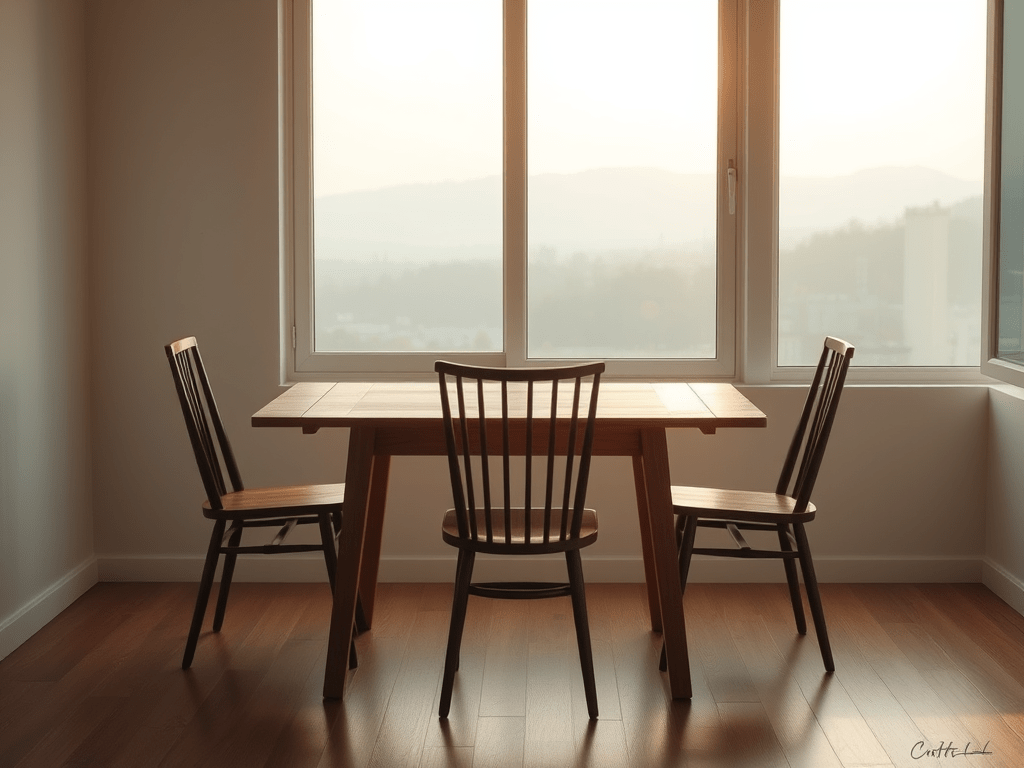
I sat across a quiet table
from the person I used to be.
No accusations. No applause.
Just three versions of me
arriving without invitation—
as they always do
when life slows down.
The first carried momentum.
Deadlines like oxygen.
Certainty polished by repetition.
He spoke of years
spent running efficiently,
rarely stopping to ask
whether the race still mattered—
only whether it was being won.
The second sat differently.
Quieter.
Less interested in speed,
more curious about direction.
He spoke of the pause—
not as absence,
but as a necessary silence
where noise finally lost its authority.
“This is why we stopped,” he said.
“Not because the journey ended,
but because listening had become urgent.”
Then the third arrived—
the one I am becoming.
No résumé.
No targets.
No urgency disguised as ambition.
He brought nothing but a calm attention
that made the room feel larger.
He didn’t speak.
He didn’t need to.
His presence alone suggested
that some answers mature
only when we stop interrogating life.
Together,
we placed a hundred letters
on the table between us—
each one a small negotiation
between fear and honesty,
between becoming useful
and becoming whole,
between noise and knowing.
For the first time,
the past did not demand relevance.
The future did not demand certainty.
And the present—
my only reliable asset—
placed a steady hand on my shoulder
and said,
“Stay.
This is where life is actually happening.”
I rose from that table
with a quiet understanding:
growth is not acceleration.
It is alignment.
And evolution is rarely loud—
it is practiced in pauses
most people mistake for delay.
To those who have walked
this inner journey with me—
reading, reflecting,
sometimes silently—
I offer not resolutions,
but a wish for the year ahead:
May you move slower
without guilt.
May you listen deeper
without fear.
May you trust the quiet signals
that don’t shout,
but know.
And may the coming year
not ask you to become more—
only to become
more true.
Letters for the Inner Journey by Pushkar
