On the pressure to always evolve, and the quiet wisdom in staying still.
A few years ago, I found myself attending a workshop titled “Redefine Yourself.” There were vision boards, ambitious declarations, and enthusiastic affirmations. Everyone was buzzing with new identities they wanted to craft—entrepreneur, artist, minimalist, digital nomad. I watched it all with polite interest, but something inside me felt… tired.
Not uninspired. Just quietly full.
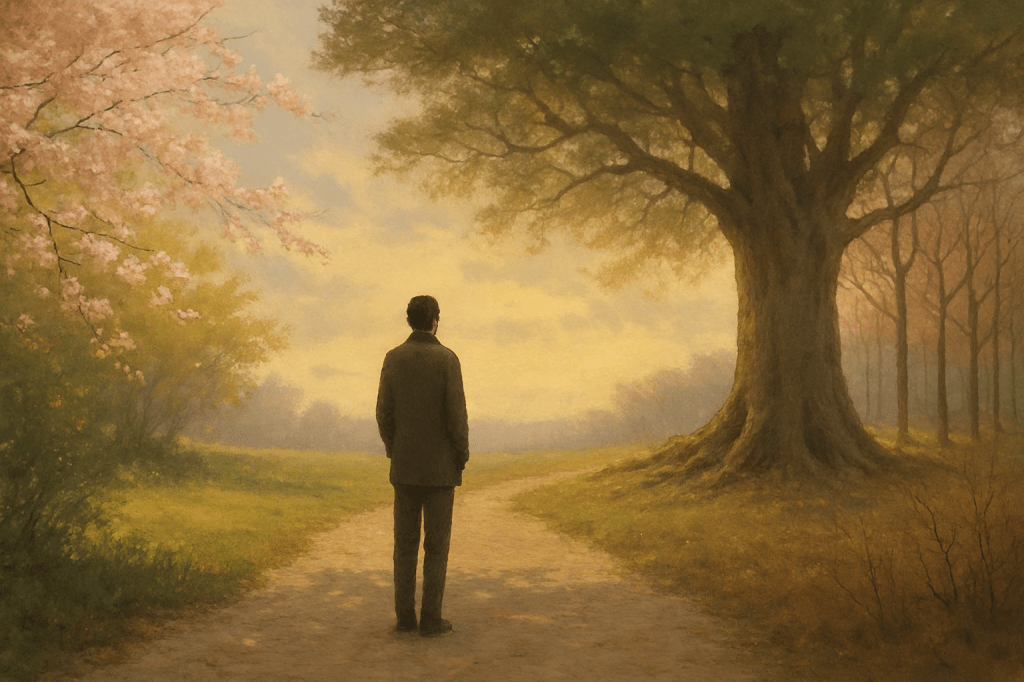
During the break, I stepped outside with my cup of chai. An old banyan tree stood at the edge of the property. No fanfare. No blooming flowers. Just quiet presence. The kind that had seen storms come and go without moving an inch. That tree didn’t reinvent itself. It deepened.
And that was the beginning of my doubt—not about growth, but about the constant pressure to transform.
There is a story we’ve been sold:
That we must always be upgrading ourselves.
A new version. A new direction. A new “why.”
But in chasing the next iteration, we often abandon the wisdom of our current self.
Yes, change is vital.
But not all change is evolution.
Some of it is escape.
There is nothing wrong with not being in a phase of reinvention.
Sometimes, what you need is not to shift gears, but to stay in the same lane with greater awareness.
To water what you’ve already planted.
To trust that stillness is not stagnation—it is integration.
So if you’re not launching, building, pivoting, or announcing something new—
That’s okay. You’re allowed to breathe.
Let the world chase its next big breakthrough.
Let you, for once, be enough in your current form.
Because sometimes, the most radical thing you can do
is not become someone else—
but come home to who you already are.
Letters for the Inner Journey by Pushkar

Whisper back, if the letter spoke to you.