On learning to see the divine in daily life
It was a morning like any other. I had stepped out to the verandah with a cup of tea, expecting nothing more than a routine few minutes of stillness. But something was different that day—not in the world, but in me.
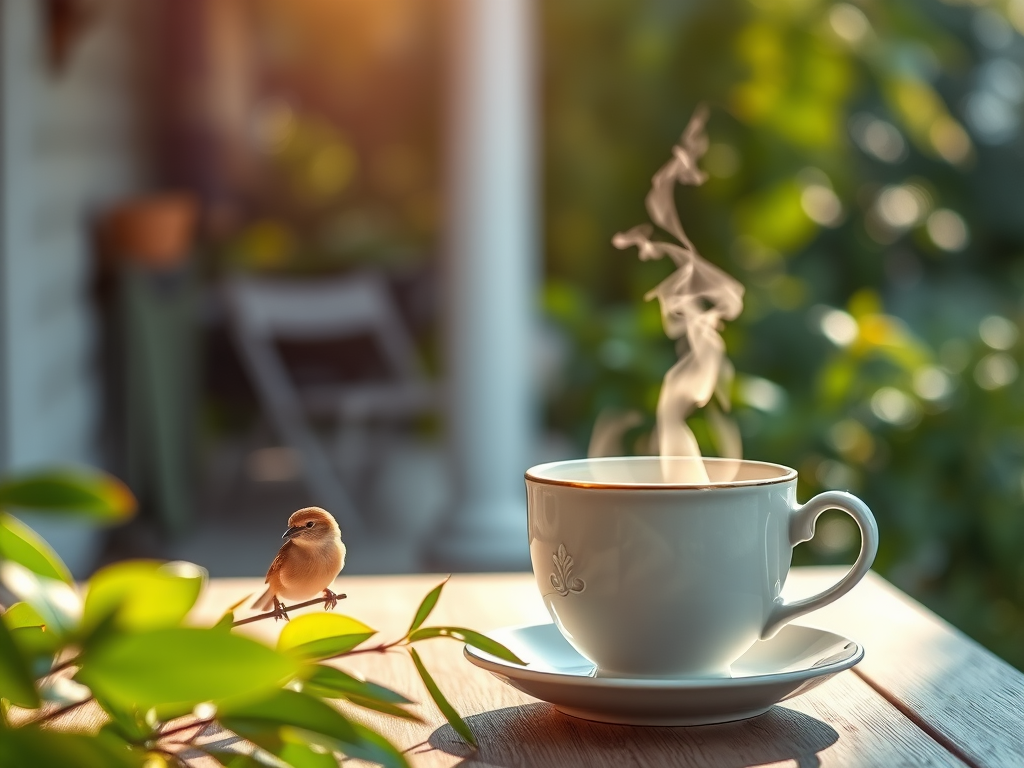
The air had that post-dawn crispness, the birds were exchanging gossip in their usual rhythm, and the soft rustle of leaves played like background music to a slow, quiet unfolding. The tea, in its familiar ceramic cup, wasn’t extraordinary. But somehow, the act of holding it—its warmth settling into my palms, the first sip meeting the chill of morning — felt almost… divine.
It wasn’t a moment staged for awe. Nothing was curated for beauty. And yet, something in it all felt sacred.
That word—sacred—is so often reserved for temples, scriptures, or solemn rituals. But what if we’ve misunderstood it? What if sacredness is not about grandeur, but about presence? Not about the extraordinary, but about how we meet the ordinary?
In our pursuit of something “higher,” we often overlook what’s already here—around us, within us, within reach. The everyday textures of life that carry the fingerprints of meaning: the smell of earth after rain, the way light hits the floor at 4 PM, the silent companionship of trees, the steady breath of someone asleep beside us.
When we move too fast, these become background noise. But when we begin to pay attention—not for utility, but for essence—they reveal something profound: that life is not a waiting room for grand moments. Life is a mosaic of small sacraments, quietly stitched together by our noticing.
There was a phase in my life when I sought the spiritual dimension in distant philosophies and silences in nature. And while those offered clarity, it was the quiet act of peeling fruit, arranging my writing desk, or watching the flicker of evening oil lamp that brought me closer to the pulse of something eternal.
There’s a particular kind of healing that comes when we stop needing life to be spectacular and start allowing it to be enough.
That doesn’t mean giving up ambition or depth. It means learning to see the extraordinary in the actual—to find poetry in dust, solace in repetition, divinity in the unremarkable.
We don’t need more things to be grateful for. We need to become people who can receive the world with grateful eyes.
A morning walk can become a ritual. A shared silence can become prayer. Folding clothes can be mindfulness. Even washing one’s hands can become an act of grounding—if we’re willing to be fully there.
And that’s what sacredness really is: a way of being with what is, not a need for what could be.
So if your today feels too ordinary, too repetitive, too uneventful—perhaps it’s time not to escape it, but to enter it more deeply.
There may be grace waiting in the most unexpected corners. In the way you stir your tea. In the texture of old wood. In the lines on your own hand. In the breath you just took without noticing.
And maybe, just maybe, you’ll find that the sacred was never missing. Only our noticing was.
Letters for the Inner Journey by Pushkar

Whisper back, if the letter spoke to you.