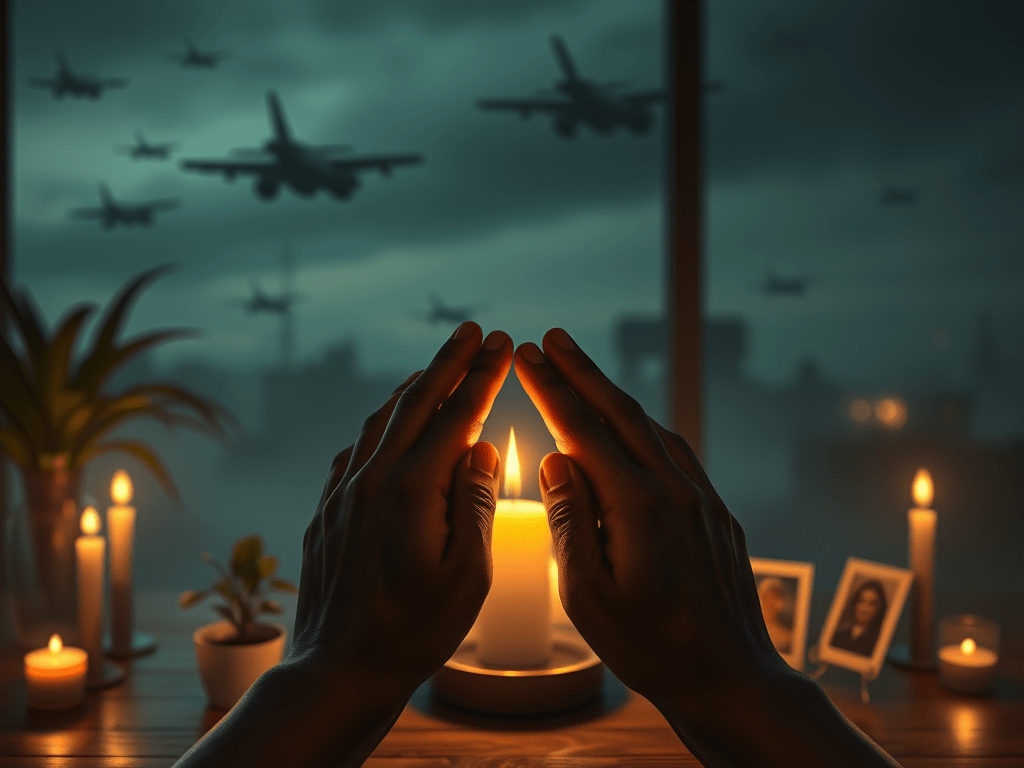
On the inner resilience we build even while worlds shatter
There’s a quiet kind of fatigue that arrives not from our own turmoil, but from watching faraway skies set ablaze.
We see images on the TV screens — tanks rolling on the roads, the echo of missiles, faces etched with fear. Even if these are not happening in our streets, they enter our minds. The shock, the sorrow, the anxiety—they wrap around us like a dense fog we didn’t choose. Because in a single moment, war becomes not just news—but something we live in.
Today, with the escalations amongst the countries — the strikes, the counterstrikes, the global unease—feel at once distant and immediate. People everywhere are waking up to the possibility of catastrophe. Even if your home is miles away, your heart cannot stay unchanged.
Yet, even in such times, a deeper question emerges:
How do we live now—not in ignorance, nor in fear—but with grounded openness?
First, let us acknowledge what is real:
- The world feels historically fragile.
- Futures seem uncertain.
- The mental toll is already present—through anxiety, worry, insomnia .
These are not signs of weakness. They are human responses to crisis.
And they do pass—like storms that leave both upheaval and growth in their wake.
What can we do about it? Here are my reflections.
- Limit your exposure. The brain wasn’t built for 24/7 war coverage. It needs breathing space to adapt.
- Create ritualed pauses: Sit with a candle. Walk slowly. Breathe deeply. Even five minutes of purpose-filled silence has a healing effect.
- Anchor to what you can control: Look at your routines, your relationships, what you do for others. Investing in small goodness always holds power—even when the headlines feel big.
Don’t wait until anxiety becomes a crisis. Instead, gather your loved ones and gently ask:
- How are we, truly, holding up today?
- What remains unspoken—pain, worry, exhaustion?
- How can we create a space where any feeling is safe to speak?
This isn’t about fixing the world. It’s about fixing the sanctuary inside our walls—and that’s revolutionary.
Even if loneliness arrives with global uncertainty, remember: small acts of connection can light profound hope.
Reach out. Check in. Listen. Share. Try:
- A quiet circle to read an uplifting content aloud and reflect.
- A shared moment of prayer, song, or silence.
- A collective decision: “Tonight, we’ll speak of grounding—not war.”
Because even in the shadow of global storms, the soul finds shelter in shared intention, not isolation.
It is true: risks and uncertainties abound. But hope is not naïve optimism—it is the daily act of choosing presence.
Each nurturing moment isn’t a denial of the world’s chaos. It’s a refusal to lose our humanity to it.
- We cultivate love, not despair.
- We build trust, not rage.
- We embody peace, not panic.
That way, when the storm passes—and it will—you and those around you will return, not hollow, but healed—with empathy deeper than fear, and purpose broader than panic.
A Final Whisper
“Let us be the ones who hold space—not for power, but for peace.”
When the skies are uncertain, let your ground be sure. Not through denial, but through gentleness. Not through avoidance, but through heart-rooted action.
Because the deepest resilience is not of nations or armies—but of hearts placed together in quiet solidarity.
Wishing you and your loved ones calm and hope, in so many storm-lit nights….
Letters for the Inner Journey by Pushkar

Whisper back, if the letter spoke to you.